Cracking the Code: Understanding MoSCoW Framework Prioritization
What is MOSCOW framework?
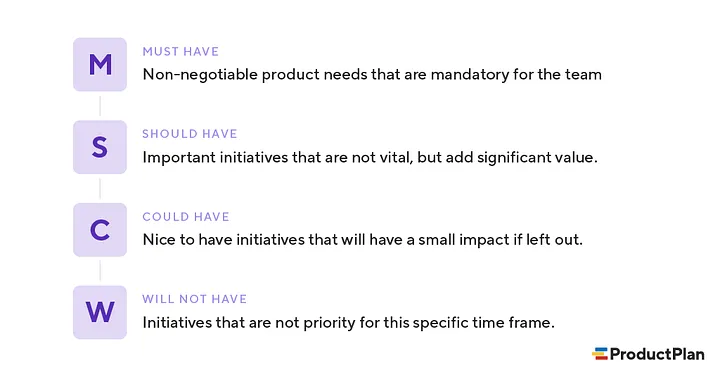
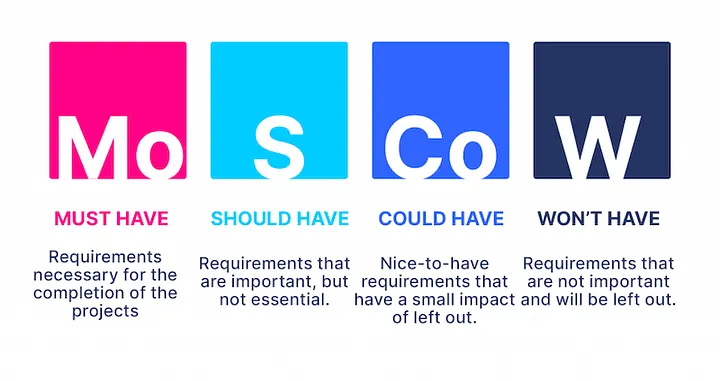
The MoSCoW Framework is like a to-do list for projects. It helps teams decide what’s super important (Must-Have), what’s pretty important (Should-Have), what’s nice but not a must (Could-Have), and what’s a definite no for now (Wouldn’t-Have). It’s a smart way to organize tasks and make sure everyone’s on the same page about what needs to get done first.
Component of MOSCOW
- Must-Have: These are the absolute essentials, the things your project cannot function without. They’re like the bricks and mortar of your project’s foundation. Example: Building a website? A secure payment gateway is a Must-Have for any online store.
- Should-Have: These features are important and make your project more valuable and user-friendly. They’re not crucial, but they definitely add a nice touch! Example: In the website example, features like user reviews or a live chat support system might be considered Should-Haves.
- Could-Have: These are the desirable features that would be nice to have but are not essential for success. Think of them as the sprinkles on your project’s ice cream sundae — tasty, but not mandatory. Example: The website could add a “related items” section or a loyalty program, but these features fall under Could-Haves.
- Won’t Have: These are features that are explicitly excluded from the current scope of the project due to limitations like time, budget, or feasibility. They might be considered in future iterations if resources allow. Example: Maybe the website won’t have a multi-language option initially, but it can be added later as a “Won’t Have” feature.
Why Do We Need Prioritization?
Prioritization is like having a to-do list for your project. It’s important because:
- Smart Resource Use: It helps you use your time and money wisely by focusing on the most important things first.
- Avoiding Overload: Keeps your project from getting too big and out of control by setting clear limits and expectations.
- Better Teamwork: Makes sure everyone on the team knows what’s most important, improving teamwork and communication.
- More Success: By doing the most important stuff first, you increase the chances of your project being successful and not getting too complicated.
Best Practices for Using MoSCoW:
Step-1.Gather the Crew:
Assemble the key players involved in your project, including developers, designers, and stakeholders. Everyone’s perspective is crucial for a well-rounded understanding of the project’s needs.
Step-2.Define the Criteria:
Establish clear criteria for categorizing features. Consider factors like:
- Impact: How does this feature affect the project’s success and user experience?
- Feasibility: Can this feature be realistically completed within the project’s timeframe and budget?
- Cost: What resources are needed to implement this feature?
- Brainstorm and Categorize: Brainstorm all the features, functionalities, or tasks for your project. Then, work together as a team to categorize them using the MoSCoW framework:
- Must-Have: Features absolutely essential for the project’s core function. Imagine building a house — a foundation is a Must-Have.
- Should-Have: Valuable features that enhance the project but aren’t strictly essential. In the house example, doors and windows would be Should-Haves.
- Could-Have: Desirable additions that would further improve the project but can be deferred if needed. Think of features like a fancy porch or a swimming pool — they’re Could-Haves for the house.
- Won’t Have: Features excluded from the current scope due to limitations or lower priorities. Maybe a rooftop garden is a Won’t Have for the house, but it can be considered later.
Step-3.Document and Communicate:
Create a clear and documented record of the MoSCoW categorization for each feature. This ensures everyone is on the same page and facilitates communication throughout the project.
Step-4.Maintain Flexibility:
While MoSCoW provides a structure, be flexible. As the project progresses, revisit priorities if necessary. A “Could-Have” today might become crucial based on new information or changing circumstances.
Real time Example:
Let’s consider a mobile app for grocery shopping. Here’s how the MoSCoW framework might be applied:
Must-Have: Browse and search for items, add items to a cart, and securely process payments.
Should-Have: User accounts and shopping lists, personalized product recommendations, and order history tracking.
Could-Have: In-app deals and coupons, store location finder, and integration with loyalty programs.
Won’t Have: Live chat support, voice-activated product search, and personalized recipe suggestions (for the initial launch).
Modified MoSCoW:
Some teams utilize a modified MoSCoW approach by adding an extra category:
Nice-to-Have: This category sits between “Could-Have” and “Won’t Have,” representing features that are desirable but less essential than “Could-Haves.”
MoSCoW: Pros and Cons
Simple and easy to understand: The MoSCoW framework is intuitive and easy to grasp for everyone involved.
Promotes communication and collaboration: It encourages open discussion and collaboration among stakeholders, fostering a shared understanding of priorities.
Flexible framework: The MoSCoW categories can be adapted to various project types and requirements.
May oversimplify complex projects: The MoSCoW framework might not be suitable for highly intricate projects with numerous dependencies.
Requires ongoing communication: Maintaining open communication and revisiting priorities is crucial to ensure the framework’s effectiveness.
Conclusion:
In conclusion, the MoSCoW framework serves as a guiding compass in the intricate landscape of project prioritization. Its ability to categorize tasks, enhance communication, and allocate resources efficiently empowers teams to navigate projects successfully. However, acknowledging its subjectivity and potential limitations, it’s crucial to integrate the MoSCoW approach with complementary methodologies for a comprehensive project management strategy. Embrace the adaptability of MoSCoW while recognizing its place within the broader spectrum of project management tools, ensuring a well-rounded and effective approach to project prioritization.